Everyone told me my second pregnancy would be easier. “You’ve done this before,” they told me and so I should know what to expect.
That was exactly the problem: I knew exactly what to expect - and this made me incredibly anxious.
My first birth, during the height of the pandemic, was long, painful, and lonely. My water broke, but labor never progressed. Hours passed as I waited in a pre-labor room, hooked to monitors, contracting but not dilating. Labor dragged on for hours, and I was in intense pain. Eventually, we learned my son had two amniotic sacs - and only one had ruptured. Eventually, they started Pitocin.
I didn’t want to do an epidural at first, because I didn’t want the side effects, but as the night stretched on and the pain intensified, exhaustion took over and I was all about it.
He was also a large baby: nine pounds with a 99th percentile head, so pushing on my back was exhausting and painful.
It wasn’t until later that I realized how much I could have done differently. For example, no one told me I could change positions if I felt uncomfortable. No one guided my breathing or explained what was happening to my body. I had no doula, and no coach (because during the pandemic you were not allowed too many people in the room), just my husband and I - two terrified first-time parents.
At the time, I didn’t think of it as trauma; it was just the normal birth process. But as I talked with other women, and later, my doulas, I realized how little control I had and how that simple fact had affected me. I wanted my second pregnancy to be different.
I work as a researcher, and so I live in a world of data, evidence, and preparation. So when I came across economist Emily Oster’s book, Cribsheet: A Data-Driven Guide to More Relaxed Parenting, I was struck by one piece of advice: “If you want better outcomes, get a doula.”
The book made an impact on my next pregnancy. This second time, I wanted to walk into birth feeling informed, supported, and empowered.
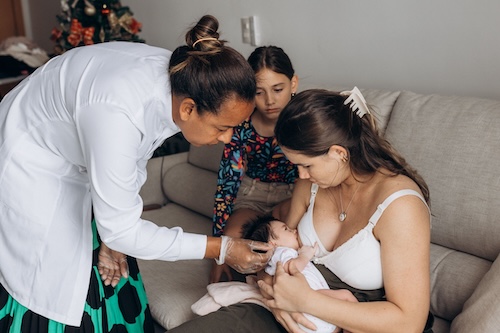
I found Mahmee through my health insurance, and from my first conversations with my new doulas Angela and Andrea, I was hooked. I could not believe I had not found them sooner. They helped me understand what went right and what went wrong during the first birth, and we talked through every single option I would have during and after birth. We practiced breathing, positions, and how to use tools like a rebozo for comfort. One of my doulas also shared that her first birth was traumatic too, which led her to become a doula. This made me feel I was being cared for by someone who had gone through the same things I had.
My husband also learned how to support me physically; how to massage, how to help me relax, or how to respond when things got intense.
This pregnancy feels completely different. Since my first was during COVID, I barely left home. This time, I’ve been active; even traveling for conferences and visiting family abroad. Things feel a lot lighter this time.
Since we are both scientists, both of us love to learn. Having real data (even if it was about labor positions and breathing techniques) helped us feel calmer. This information and educational tidbits gave us something solid to hold onto in the uncertainty of birth.
I’ll admit, I was skeptical of virtual doula care at first. I teach online sometimes, and I’ve seen how hard it is to stay focused behind a screen. But the one-on-one virtual sessions worked beautifully. I was surprised by how personal and practical they felt. And later, when we met Andrea in person, everything clicked; she showed us exactly how to apply what we’d practiced virtually. I felt like my Mahmee team was on top of everything.
Looking back, what stands out most isn’t a single piece of advice or a specific exercise. It’s the shift in mindset. Essentially I went from helplessness to understanding.
My first birth was something that happened to me. My second feels like something I’m part of.
I have also noticed how pregnancy pain gets normalized, with the assumption that, “Everyone goes through it.” It’s frustrating when a woman’s discomfort is dismissed. Sometimes you just need someone to take you seriously. Mahmee did that for me for my second pregnancy.
Information hasn’t removed the uncertainty because I still don’t know exactly how my labor will unfold. But it’s replaced fear with readiness. I know what questions to ask, what positions to try, when to rest, and when to advocate for myself. I also now have some amazing doulas by my side.
Knowledge can transform how we deal with big milestones in our lives; not as bystanders, but as active participants in our own stories.
For me, that’s what empowerment really means.
Meet your own team of doulas, lactation consultants, and more, at Mahmee