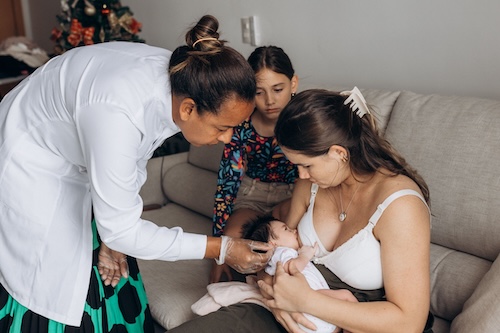
When people hear the phrase cultural competency in maternity care, they often think of one thing: language. But according to Monique Cowan, a birth doula and maternity care expert at Mahmee, that definition barely scratches the surface.
“Cultural competency isn’t just about whether someone speaks your language,” Cowan explains. “It’s about whether you feel respected, understood, and safe.”
And in birth, where emotions run high and decisions can move quickly, that sense of safety matters deeply.

Cowan says that while shared background can naturally create comfort, cultural competency is ultimately about trust.
“There’s a trust level that comes when someone looks like you or comes from a similar background,” she says. “That’s just human nature. But even if you don’t share the same culture, you absolutely need to be educated about the culture of the person you’re supporting — and you have to be respectful.”
For many families, particularly Black mothers who face disproportionately higher maternal health risks in the U.S., feeling heard in medical spaces is critical. When patients feel dismissed or minimized, trust erodes. Cultural competency helps rebuild it.
“It’s about creating a safe space,” Cowan says. “If you’re not creating safety, you’re just adding to the problem.”
Cowan wants you to know that culture isn’t just about holidays or dietary preferences.
“We’re not just talking about food or religion or dialect,” she says. “We’re also talking about generational dynamics.”
In many families, grandmothers and elders play a powerful role in pregnancy and birth. A culturally competent doula understands how to navigate that dynamic thoughtfully.
“If I know family members are closely involved, I’ll invite them to sit in on an appointment,” Cowan explains. “Especially grandmothers. They appreciate being asked. It shows respect.”
That respect can prevent tension in the delivery room and help everyone feel included — without overshadowing the birthing parent’s voice.
One of the most important parts of culturally responsive care, Cowan says, is asking questions rather than making assumptions.
“I ask every client: Is there anything culturally or religiously that I need to know? Anything you want honored during your birth?” she says. “It’s my responsibility to educate myself. It’s not theirs to teach me.”
Even small gestures matter. Cowan gives simple examples: asking whether shoes should come off before entering a home, or whether certain modesty practices are important.
“Those things seem small,” she says, “but they communicate respect.”
Labor is intense. Decisions can happen quickly. Emotions are heightened. When a mother feels culturally misunderstood, stress can compound.
“When someone feels respected, they’re more likely to speak up,” Cowan says. “They’ll ask questions. They’ll say if something feels off.”
That sense of psychological safety can change the entire experience.
Cultural competency, she emphasizes, is not about being perfect. It’s about being willing to listen.
“It’s about dignity,” Cowan says. “Every woman deserves to feel heard and respected while she’s bringing her baby into the world.”
And in birth care, that respect can make all the difference.
Monique Cowan is a Birth and Postpartum Doula at Mahmee, and Lactation Educator with 15 years of experience. She was part of the first cohort of Los Angeles County AAIMM doula program and has contributed to training medical students, mentoring doulas, and coaching families. Monique is deeply passionate about educating the community-at-large on the realities of pregnancy, birth, and postpartum, believing that informed communities are better equipped to support those navigating this sacred transition with care, confidence, and connection.
Start your Mahmee journey here.