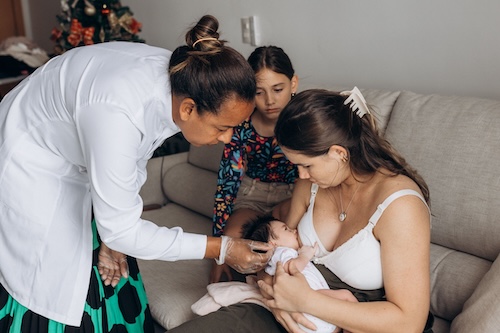
Postpartum is often treated as something you figure out once the baby is already home. But according to Jade, a Mahmee doula, that's one of the biggest reasons new parents feel overwhelmed in the early weeks.
We've talked before about the emotional preparation postpartum requires - understanding that you won't bounce back right away, recognizing burnout, and protecting your mental health. But what about the practical, tactical work of setting up your support system and recovery space before labor even begins?
"The postpartum period gets overlooked," she says. "A lot of first-time moms don't realize how much support they'll actually need."
Instead of waiting until you're exhausted and healing and with a major appetite, Jade encourages families to plan for postpartum with the same intention they bring to birth. Here's how she recommends doing it - before labor even begins.
One of the most important postpartum preparations, Jade says, is deciding who will help, and how. Many new parents assume they'll "just manage," especially if they're used to being independent. But postpartum healing requires rest, and that means letting go of the idea that you need to do everything yourself.
Jade encourages parents to identify support people ahead of time and clearly define what help looks like. That might include asking visitors to bring frozen meals, help with errands like grocery runs or mailing packages, or assist with pets or household tasks. "If you have to leave your house, ask for help," she says. The goal is to minimize unnecessary outings so the body can heal.
The key is being specific. It's not enough to tell someone "we might need help"—it's about mapping out exactly what would be most useful and then actually asking for it before you're in survival mode.

Visitors can be supportive or draining depending on expectations, and Jade recommends having conversations before the baby arrives about what visiting will look like. This includes discussing how long visits will be, whether visitors are expected to help, and when rest and privacy take priority.
Setting boundaries ahead of time makes it easier to protect rest during the first 40 days, which Jade emphasizes as a critical recovery period. It's much harder to ask someone to leave when you're already exhausted than it is to set clear expectations in advance. And when people know what's expected, they're often more helpful.
Jade encourages parents to think beyond the hospital bag and prepare their home for postpartum recovery. That means having a postpartum care kit ready at home, with diapering and feeding stations set up in advance and supplies easily accessible so nothing requires searching or effort.
"When you're in it, you don't want to be scrambling," she says. Preparation allows parents to focus on healing and bonding instead of logistics. The difference between having everything you need within arm's reach and having to walk across the house to find diaper cream at 3 a.m. might seem small, but in those early weeks, those small things matter enormously.
Many first-time parents don't realize how quickly postpartum appointments begin. Jade reminds families that newborns typically see a pediatrician within three to five days after discharge. That's not a lot of time to settle in before you're already getting back in the car.
She also prepares parents for their own recovery timeline, including ongoing physical healing at home and a six-week postpartum checkup before being cleared for full activity. Understanding this timeline ahead of time helps parents set realistic expectations and prioritize rest. You're not going to bounce back immediately, and knowing that from the start makes it easier to be gentle with yourself.

Finally, Jade encourages parents not to overbuy. Many families accumulate baby clothes and breastfeeding gadgets they never use. She recommends keeping things simple and focusing on what truly supports daily life; especially tools that allow parents to care for their baby while resting and recovering.
You don't need every product on the registry checklist. What you need is the basics, a solid support system, and permission to spend those first weeks doing very little besides feeding, sleeping, and getting to know your baby.
Postpartum, Jade explains, isn't about doing more— it’s about doing exactly what you think you need, and with more support.
If you're preparing for postpartum and want guidance on planning support, recovery, and care, Mahmee's doulas are here to help. Learn more about how Mahmee supports families through pregnancy, birth, and the postpartum period here.